

Introduction
Brief Overview of Stock Investing
Stock investing involves purchasing shares of ownership in publicly listed companies. When individuals buy stocks, they become part-owners of those businesses and can benefit from their success through price appreciation and dividends. Over time, stock investing has proven to be one of the most effective ways to build long-term wealth, offering higher potential returns compared to traditional savings or fixed-income investments—though it also comes with higher risk.
Why More Filipinos Are Investing in Stocks in 2025
In recent years, more Filipinos have started to explore stock investing due to several key factors. The rise of digital trading platforms has made investing more accessible, with mobile apps allowing users to buy and sell shares conveniently. Increased financial literacy initiatives from schools, banks, and government agencies have also encouraged more people to participate in the stock market. Additionally, low interest rates and inflation have pushed investors to seek better returns compared to savings accounts and time deposits. In 2025, the growing economy and improved market confidence continue to drive interest in equities among Filipino investors.
The Importance of Understanding Different Stock Investment Options
Before entering the market, it is crucial for investors to understand the various types of stock investments and strategies available. These include blue-chip stocks, growth stocks, dividend-paying stocks, and exchange-traded funds (ETFs). Each option carries a different level of risk and potential return. By learning how these investments work, investors can make informed decisions that align with their financial goals and risk tolerance, helping them avoid common mistakes and improve long-term outcomes.
What Readers Will Learn from This Article
This article will guide readers through the fundamentals of stock investing—covering the risks involved, how to get started, and the essential tools and resources available to investors. It will also discuss practical strategies for building a strong investment foundation, maintaining emotional discipline, and making informed decisions in the dynamic Philippine stock market of 2025.
Understanding Stock Market Basics

What Are Stocks and How Do They Work?
Stocks represent units of ownership in a company. When an investor buys a company’s stock, they become a part-owner or shareholder of that business. This ownership entitles them to a portion of the company’s profits and, in some cases, voting rights during shareholder meetings.
Companies issue stocks to raise capital for business expansion, debt repayment, or new projects. These stocks are traded on a stock exchange—such as the Philippine Stock Exchange (PSE)—where investors can buy and sell them through licensed brokers or online trading platforms.
The price of a stock fluctuates based on supply and demand, company performance, and overall market conditions.
Difference Between Stocks, Shares, and Equities
Stocks
A general term referring to ownership in one or more companies. Saying “I invest in stocks” means owning shares in different businesses.
Shares
A single unit of ownership in a specific company. For example, owning 100 shares of Ayala Corporation means holding 100 individual units of that company’s stock.
Equities
The total value of ownership interest in a company after deducting its liabilities. “Equities” is the broader term encompassing all ownership instruments like stocks and shares.
How Investors Make Money
Investors can earn returns from stocks in two primary ways:
1. Dividends
Regular payments made by a company to its shareholders, typically distributed from its profits. Dividend-paying companies are often well-established and financially stable, offering steady income.
2. Capital Appreciation
The increase in a stock’s value over time. Investors realize capital gains when they sell shares at a higher price than they paid. Long-term investors often seek capital growth, while traders may target short-term price movements.
Key Terms to Know
Initial Public Offering (IPO)
The process by which a private company offers its shares to the public for the first time, becoming publicly listed on the stock exchange.
Index
A statistical measure tracking the performance of a group of stocks. For instance, the PSEi (Philippine Stock Exchange Index) reflects the performance of the top 30 listed companies in the Philippines.
Portfolio
The collection of all investments owned by an individual or institution, including stocks, bonds, mutual funds, and other assets. A diversified portfolio helps spread risk and improve long-term stability.
Market Capitalization
The total market value of a company’s outstanding shares, calculated by multiplying the current share price by the number of issued shares. Companies are often classified as large-cap, mid-cap, or small-cap based on their market capitalization.
Why Invest in Stocks?
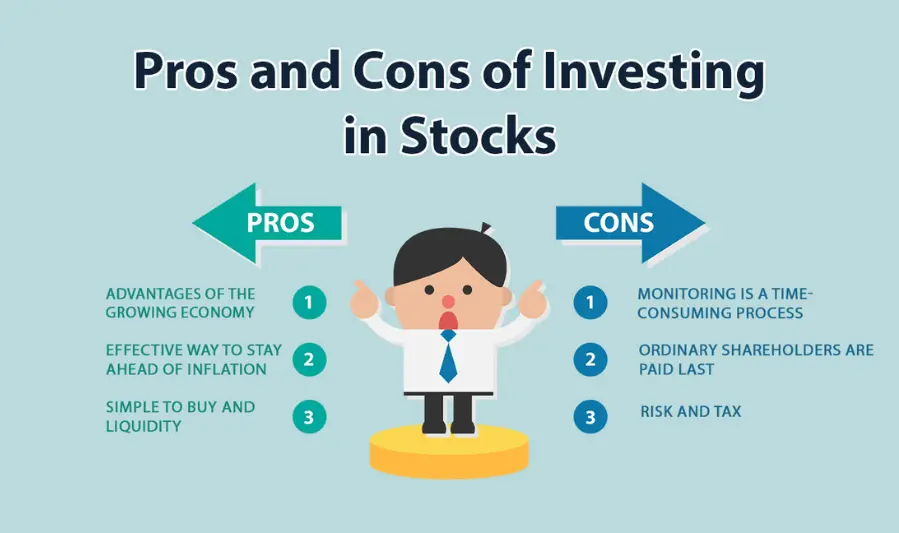
Historical Performance vs. Savings and Bonds
Historically, stocks have outperformed traditional savings accounts and fixed-income investments such as bonds.
- Savings accounts typically offer low interest rates that may not keep pace with inflation, leading to a gradual loss of purchasing power over time.
- Bonds provide relatively stable but modest returns, primarily suited for conservative investors or short-term goals.
- Stocks, on the other hand, have shown higher average annual returns over long periods, rewarding investors who can tolerate short-term volatility.
For example, while savings accounts in the Philippines may earn around 1–2% annually, well-diversified stock portfolios have historically delivered significantly higher returns over the long term.
Long-Term Wealth-Building Potential
Investing in stocks allows individuals to participate in the growth of successful companies.
When businesses expand and generate profits, their stock prices tend to rise, increasing the value of shareholders’ investments. Over time, reinvested dividends and capital appreciation can compound, creating substantial long-term wealth.
Compounding in Action
Compounding occurs when the returns earned on an investment begin generating additional returns. By reinvesting dividends and staying invested over time, investors can achieve exponential growth in portfolio value.
Inflation Protection and Compounding Growth
Inflation reduces the purchasing power of money, but stock investments can help offset this effect.
- Growth potential: As companies increase their prices and revenues in response to inflation, their stock values may also rise.
- Real asset exposure: Stocks often represent ownership in businesses that own tangible assets—like property, equipment, and intellectual property—that can appreciate in value during inflationary periods.
When combined with compounding, stock investing helps investors preserve and grow wealth even as prices increase over time.
Benefits and Risks of Stock Market Investing
Benefits
- High return potential: Over time, stocks tend to offer greater returns than most other asset classes.
- Ownership and dividends: Investors share in company profits and may receive regular dividend income.
- Liquidity: Publicly traded stocks can usually be bought or sold quickly through online platforms.
- Accessibility: Digital brokers and mobile apps have made stock investing easy and affordable, even for beginners.
Risks
- Market volatility: Stock prices fluctuate daily due to economic, political, and global factors.
- Potential losses: Investments can lose value, especially in the short term.
- Emotional decision-making: Fear and greed can lead to impulsive buy-and-sell actions that hurt long-term performance.
By understanding and managing these risks through diversification and discipline, investors can take advantage of the long-term benefits of stock investing.
Types of Investment Options in Stocks
Stock investing can be done in several ways, depending on an investor’s goals, time horizon, and level of involvement. Below are the main stock investment options available to Filipino investors, ranging from direct stock purchases to professionally managed funds.
1. Direct Stock Investing
How to Buy Stocks Directly from the Market
Direct investing means purchasing shares of companies listed on the Philippine Stock Exchange (PSE). Investors buy and sell these shares through licensed stockbrokers or online trading platforms.
Steps to Open a Brokerage Account
- Choose a licensed broker – Select an accredited online or traditional brokerage firm.
- Complete account registration – Fill out application forms and submit valid identification.
- Fund your account – Deposit money into your trading account via online banking or over-the-counter channels.
- Start trading – Use the broker’s online platform to buy and sell stocks on the PSE.
Popular Online Brokers in the Philippines
- COL Financial
- BPI Trade
- First Metro Securities (FirstMetroSec)
- GStocks PH (GInvest Platform by GCash)
These platforms provide research tools, market data, and user-friendly interfaces suitable for both beginners and experienced investors.
Blue-Chip vs. Growth vs. Penny Stocks
- Blue-Chip Stocks: Shares of large, stable, and financially sound companies with consistent performance (e.g., Ayala Corporation, SM Investments).
- Growth Stocks: Companies expected to grow rapidly, often reinvesting profits instead of paying dividends.
- Penny Stocks: Low-priced, small-cap companies with high risk and potential for large gains or losses.
Tips for Researching and Picking Good Companies
- Review financial statements and profitability trends.
- Analyze industry position and competitive advantages.
- Check management track record and governance.
- Assess valuation metrics such as the price-to-earnings (P/E) ratio.
- Diversify across sectors to manage risk.
2. Equity Mutual Funds
How Mutual Funds Work
A mutual fund pools money from multiple investors to buy a diversified portfolio of stocks, bonds, or other securities. Each investor owns shares in the fund, representing proportional ownership of its holdings.
Types of Equity Mutual Funds
- Index Funds: Mirror the performance of a specific market index (e.g., PSEi).
- Growth Funds: Focus on companies with high earnings potential.
- Balanced Funds: Combine stocks and bonds to balance growth and stability.
Role of Fund Managers
Professional fund managers make investment decisions on behalf of investors—selecting, monitoring, and adjusting the portfolio to align with the fund’s objectives.
Advantages and Disadvantages
Advantages:
- Professional management
- Diversification
- Accessible with low initial investment
Disadvantages:
- Management and sales fees
- Limited control over investment decisions
- Returns depend on fund manager performance
Leading Mutual Fund Providers in the Philippines
- Sun Life Asset Management (SLAMCI)
- Philam Asset Management (PAMI)
- ATRAM Trust Corporation
- BDO Asset Management (BDO AMTC)
3. UITFs (Unit Investment Trust Funds)
What UITFs Are and How They Differ from Mutual Funds
UITFs are investment products offered by banks that pool investors’ funds into a managed portfolio of securities. Unlike mutual funds, UITFs are not corporations—investors purchase units rather than shares and do not become shareholders.
Types of UITFs
- Equity UITFs: Invest primarily in stocks for higher growth potential.
- Balanced UITFs: Mix of stocks and bonds for moderate risk.
- Index UITFs: Track a stock index, such as the PSEi, passively.
How to Invest via Banks
UITFs are available through major Philippine banks such as BPI, BDO, Metrobank, Security Bank, and UnionBank. Investors can open accounts online or in-branch and subscribe to UITFs through regular contribution plans.
Risks, Returns, and Fees
UITFs are subject to market risks similar to mutual funds. Returns vary depending on the underlying investments, and management fees are deducted from fund earnings. UITFs are not deposit products and are not insured by the PDIC.
4. Exchange-Traded Funds (ETFs)
Definition and How ETFs Function
ETFs are investment funds traded on stock exchanges, similar to individual stocks. Each ETF holds a basket of assets—such as stocks—that track the performance of a specific index.
How ETFs Track Market Indices
Most ETFs aim to replicate the movement of market indices like the PSEi, offering investors diversified exposure to the overall market through a single purchase.
Benefits of ETFs
- Liquidity: Can be bought and sold any time during trading hours.
- Low cost: Usually lower management fees compared to mutual funds.
- Transparency: Holdings are disclosed regularly.
Example: FMETF (First Metro Philippine Equity ETF)
The First Metro Philippine Equity Exchange-Traded Fund (FMETF) is the first and only ETF listed on the PSE. It tracks the performance of the PSEi, providing investors with broad exposure to the Philippine stock market.
ETF vs. Mutual Fund Comparison
| Feature | ETF | Mutual Fund |
|---|---|---|
| Trading | Bought/sold on stock exchange | Bought/sold through fund company |
| Pricing | Changes throughout the day | Priced once per day (end of trading) |
| Fees | Generally lower | Higher management/sales fees |
| Transparency | Holdings updated frequently | Holdings disclosed periodically |
5. Dividend Stocks
What Are Dividend-Paying Stocks?
Dividend stocks are shares of companies that distribute a portion of their earnings to shareholders as regular payments, usually quarterly or annually.
How Dividends Work
Dividends can be paid in cash or additional shares (stock dividends). The amount is declared by the company’s board of directors and credited automatically to investors’ accounts.
Why Dividend Investing Appeals to Long-Term Investors
Dividend-paying stocks provide a steady income stream and the potential for capital appreciation. They tend to be less volatile and are often favored by conservative or income-focused investors.
Top Dividend-Paying Companies in the Philippines
- PLDT Inc. (TEL)
- Manila Electric Company (MERALCO)
- Ayala Corporation (AC)
- Bank of the Philippine Islands (BPI)
- Globe Telecom (GLO)
Dividend Reinvestment Strategies
Reinvesting dividends by purchasing additional shares can accelerate wealth growth through compounding, allowing investors to benefit from both income and appreciation over time.
6. Index Funds
What Index Funds Are
Index funds are portfolios designed to replicate the performance of a specific stock index, such as the PSEi. They invest in the same companies that make up the index, in similar proportions.
Benefits for Passive Investors
- Low management fees
- Diversified exposure to the entire market
- No need for constant monitoring or stock picking
- Proven performance over long investment periods
PSEi Index Fund Examples
- Sun Life Prosperity Philippine Index Fund
- BDO Equity Index Fund
- ATRAM Philippine Equity Smart Index Fund
Comparing Active vs. Passive Investing
| Strategy | Description | Advantages | Disadvantages |
|---|---|---|---|
| Active Investing | Managers select specific stocks to outperform the market. | Potential for higher returns, flexibility | Higher fees, dependent on manager skill |
| Passive Investing | Follows a market index without frequent trading. | Lower costs, consistent performance | Limited ability to beat the market |
How to Get Started in Stock Investing
Starting your investing journey can seem intimidating at first, but with proper guidance and discipline, anyone can learn to build wealth through the stock market. This section outlines the essential steps to help beginners confidently begin investing in Philippine stocks.
Step-by-Step Guide: From Opening an Account to Making Your First Investment
1. Choose a Licensed Brokerage
Select a stockbroker accredited by the Philippine Stock Exchange (PSE). Consider factors such as minimum investment requirements, platform usability, research tools, and customer support. Popular online brokers include COL Financial, BPI Trade, First Metro Sec, and GStocks PH (via GCash).
2. Open and Fund Your Account
Complete the broker’s registration process by submitting valid identification and personal documents. Once approved, fund your trading account using online banking or over-the-counter deposit options.
3. Learn to Use the Trading Platform
Familiarize yourself with your broker’s online interface. Practice placing buy and sell orders using a virtual or demo account if available.
4. Place Your First Trade
After conducting research, buy your first stock by entering the stock symbol, desired quantity, and price. Confirm the order and monitor your portfolio’s performance through your broker’s dashboard.
5. Review and Track Your Investments
Regularly check your portfolio, read company updates, and stay informed about market trends. Adjust your holdings when necessary to stay aligned with your financial goals.
How to Research and Analyze Companies
Effective investing begins with research. Understanding what you are buying helps you make informed and confident decisions.
1. Fundamental Analysis
This approach evaluates a company’s financial health and business performance by reviewing:
- Revenue and profit growth
- Debt levels and cash flow
- Return on equity (ROE) and other key financial ratios
- Industry position and competitive advantages
2. Technical Analysis
Focuses on price movements and market trends using charts, volume patterns, and historical data. This method is often used for short-term trading decisions.
3. Qualitative Factors
Assess non-financial aspects such as management quality, corporate governance, brand reputation, and innovation potential. These often influence long-term company performance.
Setting Investment Goals and Budget
Before investing, define your financial objectives and determine how much you can invest consistently.
- Short-term goals: May include saving for a down payment or education within 3–5 years.
- Long-term goals: Typically retirement or wealth accumulation over 10 years or more.
Establish a monthly or quarterly investment budget that doesn’t compromise essential expenses or emergency funds. Consistency is more important than investing a large sum at once.
Peso-Cost Averaging Strategy
What It Is
Peso-cost averaging (PCA) is a disciplined investment approach where you invest a fixed amount regularly, regardless of market conditions. This strategy allows you to buy more shares when prices are low and fewer when prices are high.
Benefits of PCA
- Reduces the impact of market volatility
- Encourages long-term discipline
- Simplifies decision-making by removing emotional bias
Example
If you invest ₱5,000 every month in a company’s stock, your average cost per share balances out over time—helping minimize the risk of buying at a market peak.
Importance of Patience and Long-Term Mindset
Stock investing rewards patience and consistency. Short-term market fluctuations are normal, but history shows that long-term investors typically achieve higher returns than those who frequently trade.
Key Mindset Principles
- Avoid reacting emotionally to short-term losses.
- Focus on company fundamentals rather than daily price movements.
- Reinvest dividends to maximize compounding growth.
- Review your portfolio periodically but avoid overtrading.
A long-term perspective allows investors to ride out market volatility, benefit from compounding, and steadily build wealth over time.
you may also like to read these posts:
Phát triển kỹ năng nghề thủ công
Mundo ng Bukas: Ang Papel ng Inobasyon sa Pag-unlad
Smart Budget Planning for Families: A Practical Guide to Financial Harmony
Key Risks in Stock Market Investing
Investing in the stock market offers opportunities for growth and wealth creation, but it also involves various risks. Understanding these risks is essential to making informed decisions and building a resilient investment strategy.
Market Volatility and Timing Risk
Market Volatility
Stock prices can fluctuate significantly due to economic events, global market trends, or investor sentiment. Short-term volatility is normal, but it can be unsettling for new investors who are not accustomed to seeing frequent changes in portfolio value.
Timing Risk
Trying to “time the market” — buying when prices are low and selling when they are high — is extremely difficult, even for professional investors. Missing just a few of the market’s best-performing days can drastically reduce long-term returns.
Strategy: Instead of timing the market, focus on time in the market by staying invested consistently and following a long-term plan.
Company Performance and Management Issues
Business Fundamentals
A company’s stock value depends heavily on its financial health, profitability, and growth prospects. Declining sales, rising debt, or poor strategic decisions can lead to falling share prices.
Management and Governance Risks
Leadership quality plays a major role in company success. Mismanagement, lack of transparency, or unethical practices can damage a company’s reputation and negatively affect its stock performance.
Tip: Review a company’s annual reports, management history, and governance practices before investing.
Economic and Political Factors
The broader economic and political environment also influences stock market performance.
- Economic risks: Inflation, interest rate hikes, and currency fluctuations can reduce corporate profits and investor confidence.
- Political instability: Policy changes, regulatory uncertainty, or geopolitical conflicts can cause market declines.
- Global influences: Events in major economies like the U.S. or China can affect emerging markets, including the Philippines.
Strategy: Stay updated on macroeconomic trends and diversify investments across sectors and regions to reduce exposure to systemic risks.
Diversification to Manage Risks
Diversification is one of the most effective ways to minimize investment risk. It involves spreading investments across various companies, sectors, and asset classes so that poor performance in one area can be offset by gains in another.
Ways to Diversify
- Invest in multiple industries (e.g., banking, utilities, technology).
- Include different asset types, such as bonds, mutual funds, or real estate.
- Consider regional diversification through international funds or ETFs.
A well-diversified portfolio helps smooth out returns and reduces the impact of unpredictable market movements.
Emotional Investing and How to Avoid It
The Risk of Emotional Decisions
Investors often let emotions—especially fear and greed—drive their actions. Buying impulsively during market rallies or panic-selling during downturns can lead to losses and missed opportunities.
How to Avoid Emotional Investing
- Set clear financial goals and stick to your investment plan.
- Use peso-cost averaging to remove timing bias.
- Avoid checking your portfolio too frequently.
- Remember that volatility is temporary, but sound investments grow over time.
Maintaining discipline and focusing on long-term objectives can help investors avoid emotional mistakes and stay on course toward financial success.
Strategies for Successful Stock Investing
Investing in stocks can be highly rewarding, but success requires discipline, planning, and informed decision-making. The strategies outlined below help investors maximize returns while managing risk effectively.
Long-Term Investing vs. Short-Term Trading
Long-Term Investing
Long-term investing focuses on buying quality stocks and holding them for several years or decades. This approach allows investors to benefit from capital appreciation, compounding, and dividend growth while reducing the impact of short-term market volatility.
Short-Term Trading
Short-term trading involves buying and selling stocks over days, weeks, or months to profit from market fluctuations. While potentially profitable, it carries higher risks, requires more time, and may incur additional transaction costs.
Tip: Most individual investors benefit more from a long-term approach, which aligns with wealth-building goals and minimizes emotional decision-making.
Diversification and Portfolio Rebalancing
Diversification
Spreading investments across different stocks, sectors, and asset classes reduces exposure to any single company or market event. Diversification helps smooth returns and mitigate potential losses.
Portfolio Rebalancing
Regularly reviewing and adjusting your portfolio ensures that your asset allocation remains aligned with your risk tolerance and financial goals. For example, if stocks grow faster than bonds, rebalancing may involve selling some stocks and increasing bond holdings to maintain your target mix.
Reinvesting Dividends
How It Works
Dividend reinvestment involves using dividends to purchase additional shares instead of taking them as cash. This strategy leverages compounding, allowing your investment to grow faster over time.
Benefits
- Increases shareholdings without additional capital outlay
- Accelerates wealth accumulation
- Enhances long-term returns, especially in dividend-paying stocks
Avoiding “Get-Rich-Quick” Traps
Investors should be cautious of schemes promising guaranteed high returns in a short period. These are often high-risk, speculative, or even fraudulent.
Red flags to watch for:
- Unrealistic return claims
- Pressure to invest quickly
- Lack of transparency about risks
Strategy: Stick to fundamentally sound investments, maintain discipline, and avoid chasing hype or trends.
Continuous Learning and Financial Literacy
Why It Matters
The stock market is constantly evolving, influenced by new regulations, economic trends, and technological innovations. Continuous learning helps investors make informed decisions, adapt to changes, and avoid costly mistakes.
Ways to Learn
- Read books, blogs, and research reports
- Attend online courses and webinars
- Follow reputable financial news sources
- Engage in investment communities for insights and discussions
Developing financial literacy empowers investors to confidently navigate market opportunities and risks.
Conclusion
Successful stock investing combines patience, diversification, disciplined reinvestment, caution against shortcuts, and continuous learning. By following these strategies, investors can build a resilient portfolio and achieve sustainable long-term growth.
Faqs:
What is the best way to start investing in stocks in the Philippines?
The easiest way is to open an account with a trusted stockbroker like COL Financial, BPI Trade, or First Metro Securities and start with small investments in blue-chip stocks or mutual funds.
How much money do I need to start investing in stocks?
You can start with as little as ₱1,000–₱5,000, depending on the brokerage. Mutual funds and UITFs often allow smaller initial investments, making it easier for beginners.
Are stocks safe for beginners?
Stocks involve market risks, so they are not completely risk-free. Beginners can reduce risk by investing in mutual funds, ETFs, or dividend-paying stocks and diversifying their portfolio.
How long should I keep my stocks to earn good returns?
Stock investing is generally a long-term strategy. Holding for at least 5–10 years can help you ride out market volatility and benefit from compounding growth.
Can I earn passive income from stocks?
Yes. Dividend stocks pay regular income, which can be reinvested to grow your portfolio. This allows you to earn both capital gains and passive income over time.
Conclusion
Investing in stocks is one of the most effective ways to build wealth and achieve financial freedom over time. With multiple investment options in stocks—from direct stock purchases and dividend-paying shares to mutual funds, UITFs, and ETFs—there’s a strategy for every type of investor.
The key to success is research, patience, and consistency. Start small, diversify your investments, and focus on long-term growth rather than short-term market fluctuations. By making informed decisions and staying disciplined, you can maximize returns and create a strong financial future.